
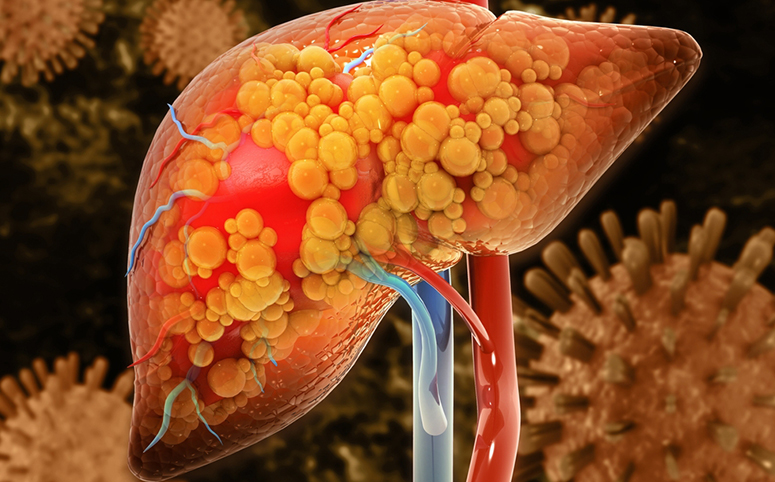
The liver is the largest organ in the body and performs important functions like storing energy and removing harmful substances from the body. However, in some situations, fat builds up in the liver, causing fatty liver disease.1 It is very common in India, with around 38.9% adults affected by it.2 There are two main types of fatty liver disease:1
- Non-alcoholic fatty liver disease (NAFLD)
- Alcoholic fatty liver disease
NAFLD, now referred to as ‘metabolic-dysfunction-associated steatotic liver disease (MASLD) is not related to heavy alcohol use.1 In this condition, there is fat accumulation in the liver, but there is little or no inflammation or injury to liver cells. People who are overweight, particularly those having fat around the waist, people who do not have a healthy diet or who are not physically active, those having conditions like high blood sugar, high blood pressure or high fat level in the blood and advanced age, are more likely to have this disease.3 Although, it is not a serious stage of fatty liver disease, it can slowly progress to a serious form unless it is controlled.1 If not controlled early, MASLD progresses into a next stage, wherein liver cells are damaged along with fat accumulation. It is called metabolic dysfunction-associated steatohepatitis (MASH). There is scarring of the liver and it can lead to cirrhosis or liver cancer.1
The disease usually goes unnoticed as it does not cause any signs. Some people have signs like weakness, feeling tired or unwell, or pain in the stomach under the right side of the ribs. MASLD is usually detected after a blood check-up, or scans are done for another reason.3
MASLD has 4 stages:

If the disease is diagnosed in early stages, healthy lifestyle changes (healthy, balanced diet, regular exercise and weight loss) help reduce the fat build-up and help the liver heal. In the advanced stage, there is a need to consult a liver specialist, who can advise additional treatment.3
It is important to remember that if you have MASLD, you will not have to manage it alone — your healthcare professional and specialist team will guide and support you throughout. There are also national charities that offer reliable information, advice and patient support.
റഫറൻസുകൾ:
- Fatty Liver Disease. Available at: https://medlineplus.gov/fattyliverdisease.html. Accessed on: 13 February 2026.
- Arvind M, Verma A, Prakash S, et al. Burden of MASLD and liver fibrosis: evidence from Phenome India cohort. Lancet Reg. Health Southeast Asia. 2026;45.
- Non-alcoholic fatty liver disease (NAFLD). Available at: https://www.nhs.uk/conditions/non-alcoholic-fatty-liver-disease/. Accessed on: 13 February 2026.