
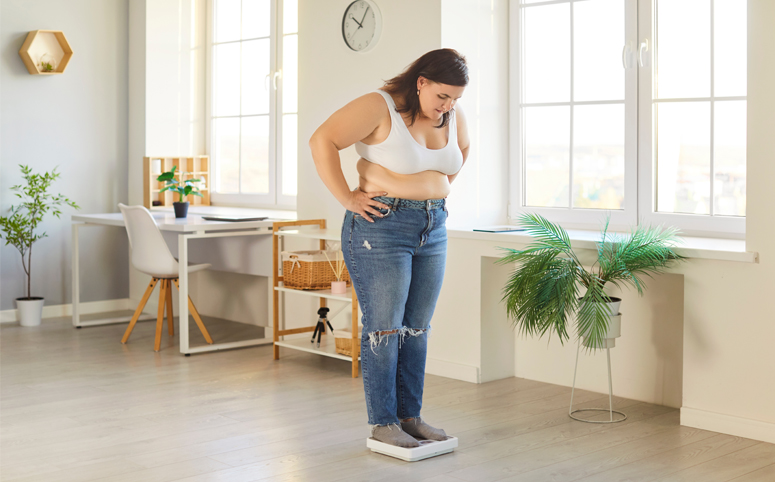
The World Health Organization reported that in 2022, 1 in 8 people worldwide were living with obesity. Obesity has become increasingly common due to changes in dietary patterns, reduced physical activity and modern lifestyles that make processed foods more accessible and sedentary behaviour more prevalent. As a result, obesity is now a major global health concern, affecting more than 1 billion people.1 Importantly, obesity is both preventable and manageable.¹ The primary goal of treatment is to achieve and maintain a healthy weight. Doing so can improve overall health and reduce the risk of obesity-related complications.2
Despite consistent efforts to follow a healthy, calorie-controlled diet and improve exercise habits, many individuals experience a weight-loss plateau—a period during which body weight stops decreasing.³ This is a common and normal part of the weight-loss process.3
What causes a weight-loss plateau?
At the beginning of a weight-loss programme, it is common to lose weight relatively quickly. Much of this initial reduction is due to loss of water weight, as the body uses stored energy that binds water. Over time, weight loss typically slows. Some muscle mass may be lost along with body fat, and because muscle tissue burns more calories than fat tissue, a reduction in muscle mass lowers the body’s overall energy expenditure. As a result, fewer calories are burned at rest, making further weight loss more gradual. When body weight stabilises (a plateau), it usually means that calorie intake is equal to calorie expenditure. To continue losing weight, it may be necessary to increase physical activity, further adjust calorie intake or both.3
How to overcome a weight-loss plateau?
If a weight-loss plateau occurs and further weight reduction is desired, maintaining consistency with healthy eating and regular physical activity is essential. Aim for at least 150 minutes of moderate-intensity exercise per week. Incorporating strength training can help build or preserve muscle mass, which supports a higher metabolic rate. Staying physically active throughout the day—for example, walking more, using the stairs and reducing sedentary time—can also make a meaningful difference. Small, sustainable adjustments can help restart weight loss and support long-term success.3
ಉಲ್ಲೇಖಗಳು:
- Obesity and overweight. Available at: https://www.who.int/news-room/fact-sheets/detail/obesity-and-overweight. Accessed on: 13 February 2026.
- Available at: https://www.mayoclinic.org/diseases-conditions/obesity/diagnosis-treatment/drc-20375749. Accessed on: 13 February 2026.
- Getting past a weight-loss plateau. Available at: https://www.mayoclinic.org/healthy-lifestyle/weight-loss/in-depth/weight-loss-plateau/art-20044615. Accessed on: 13 February 2026.